Executive Summary
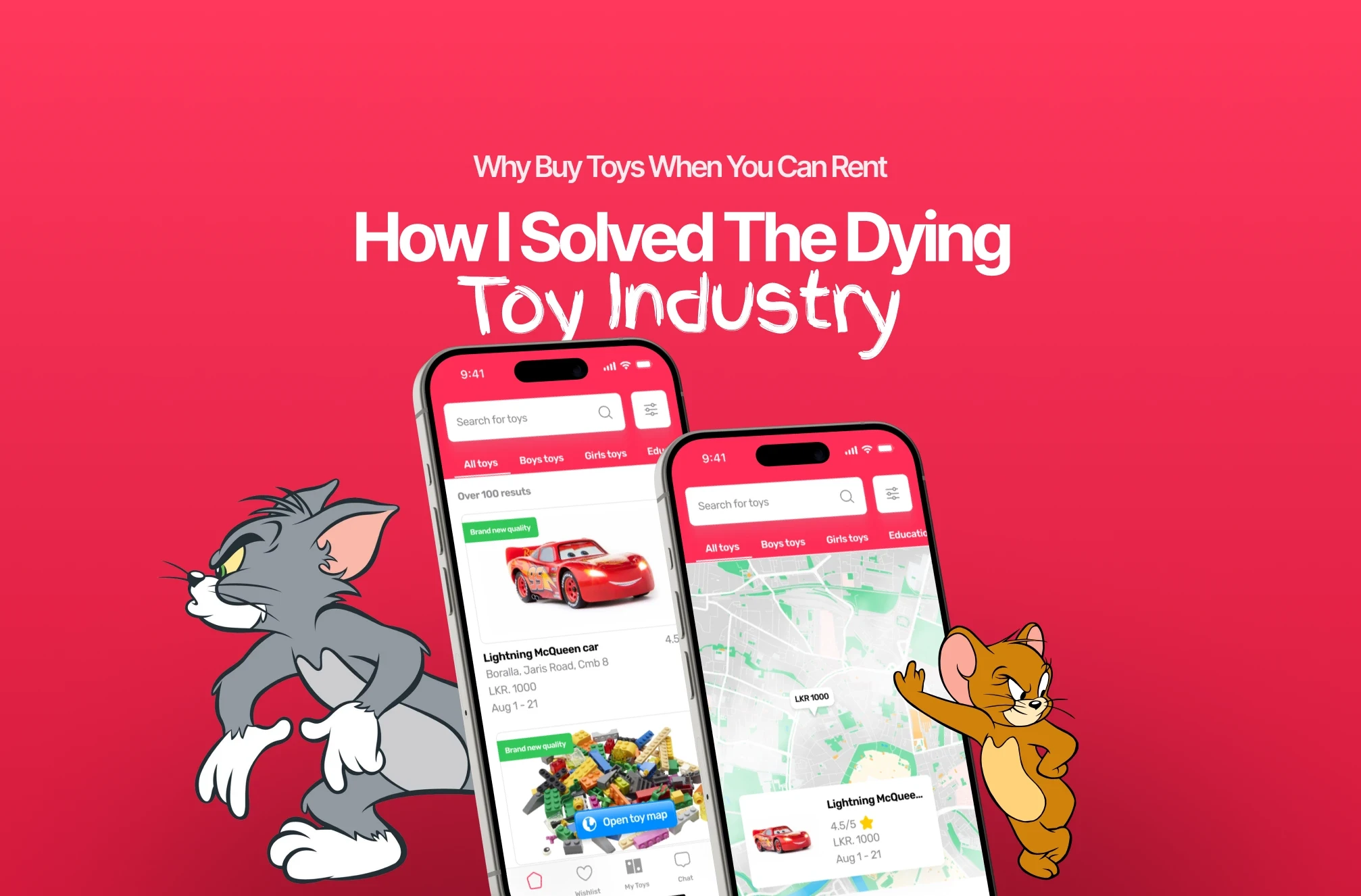
In the face of Sri Lanka’s escalating economic crisis, traditional toy ownership has transitioned from a childhood staple to a luxury beyond the reach of the average household. ToyShare is a circular economy platform designed to decouple the benefits of developmental play from the burden of high retail costs. By shifting the model from ownership to access, we ensure that cognitive and social development remains accessible to every child, regardless of their family’s purchasing power.
The Challenge
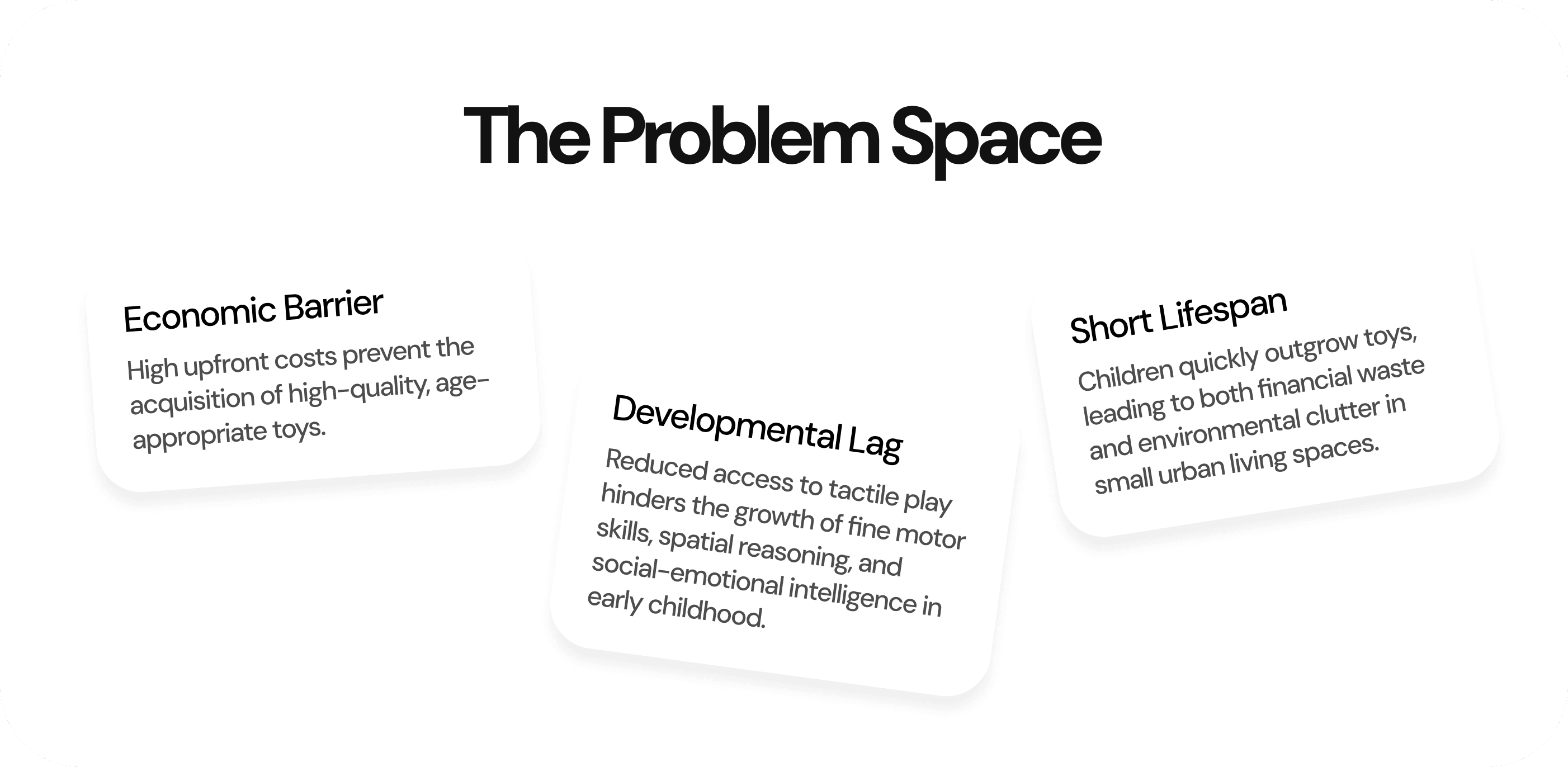
The convergence of hyper-inflation and increased import taxes has led to a 300% surge in the cost of educational toys in the local market. For Sri Lankan parents, this presents a painful trade-off between essential household expenses and the developmental tools their children need.
User Research & Discovery
The Hypothesis
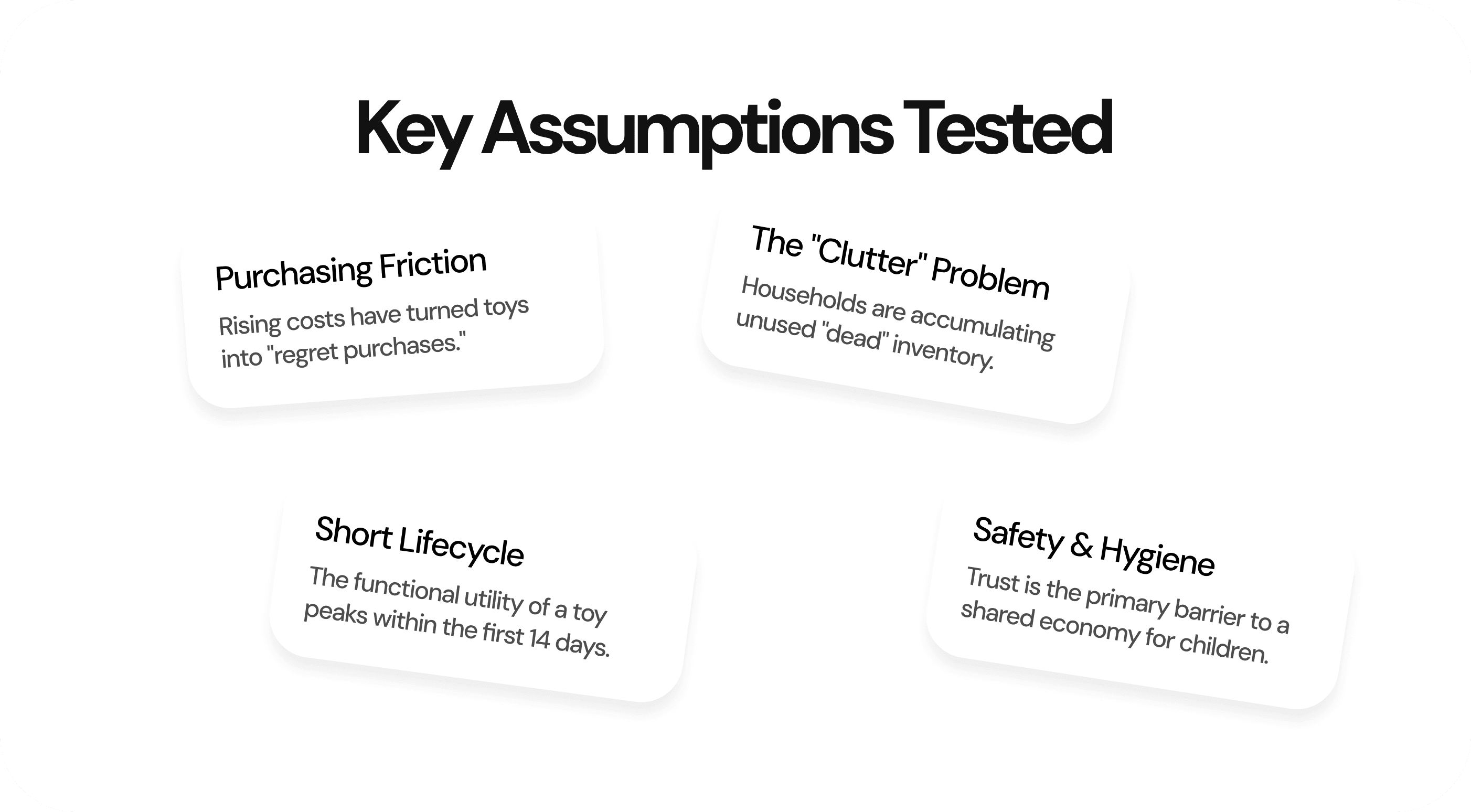
Before deploying the research, I framed a set of foundational assumptions to test the viability of a rental model. The primary focus was to validate the economic pain points, toy lifecycle, and parental psychology regarding hygiene and value.
Methodology: Quantitative Validation
I conducted a targeted survey with parents across Sri Lanka to quantify these pain points. The research focused on moving beyond "Do you like toys?" to "How does toy consumption affect your household economy?"
Your name
Your age
Do you have a kid?
Have you ever bought kids toys in Sri Lanka?
How often do you buy toys for your kid?
I think kids toys are too expensive in this economy
I have bought toys for my kid despite them being expensive
My kid do not use a bought toy for more than 2-3 weeks
My kid damages or breaks the bought toys after using
I get disappointed when my kid does not use the bought toy after a while
I get disappointed when my kid damages the bought toy after a while
I think the kids toys should be clean when buying
I think kids toys are helpful for them to learn something new
I think kids toys are harmful for them
I think buying kids toys are waste of time
My kid has seen toys of other neighbors and had asked me to buy one of them
I have many toys that my kid is not using anymore
User Research & Data Synthesis (N=20)
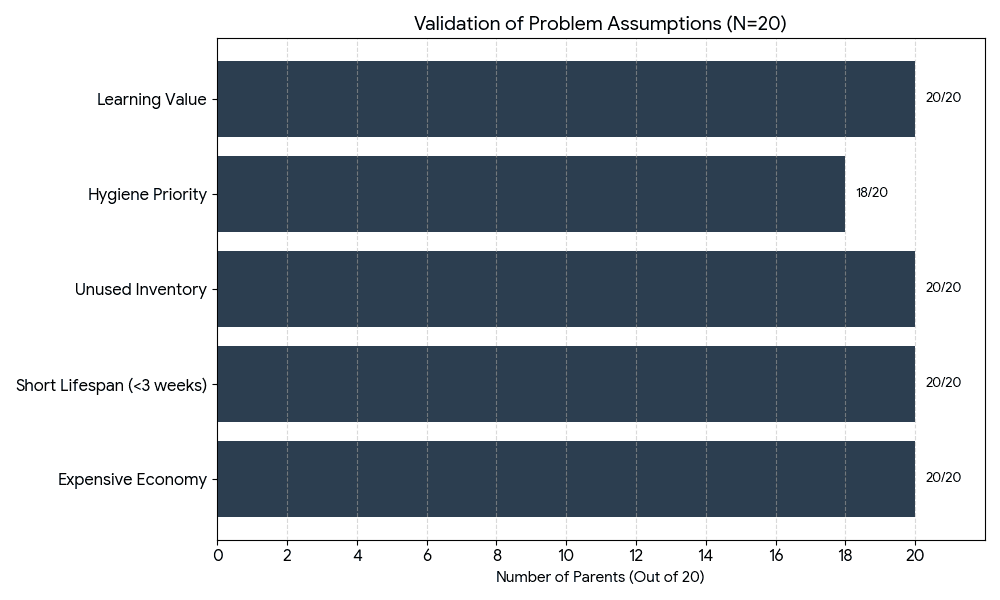
To validate the product hypothesis, I conducted a quantitative study with 20 parents across Sri Lanka. The goal was to move beyond anecdotal evidence and establish a data-driven foundation for the platform's core features: affordability, rotation, and hygiene.
Research Validation Summary
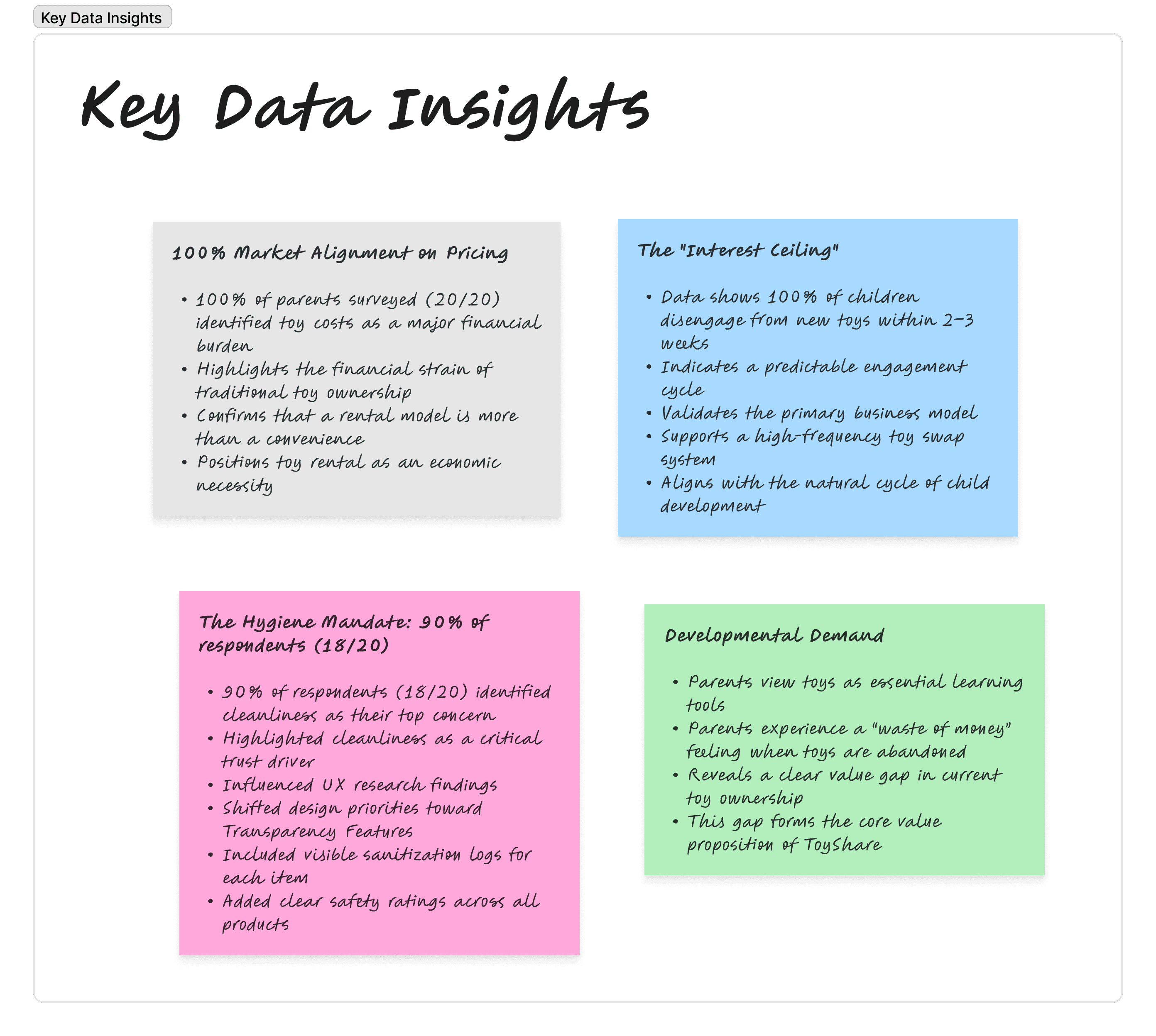
The chart below visualizes the overwhelming consensus found during the discovery phase. As a senior designer, I used this data to prioritize the product roadmap focusing on inventory rotation and trust-building UI over secondary features.
Assumption | Data Result | UX Strategy & Design Pivot |
High Acquisition Cost | 100% Agreement | Position the app as a "Savings Tool" rather than just a rental service. |
Short-term Interest | 100% Agreement | Design "Smart Reminders" to suggest a toy swap every 14 days to keep engagement high. |
Storage/Clutter Issues | 100% Agreement | Introduced a "Return for Credit" feature where parents can trade their own unused toys for rental points. |
Hygiene Concerns | 90% Agreement | Integrated a "Hygiene Guarantee" badge on every product card to lower the trust barrier. |
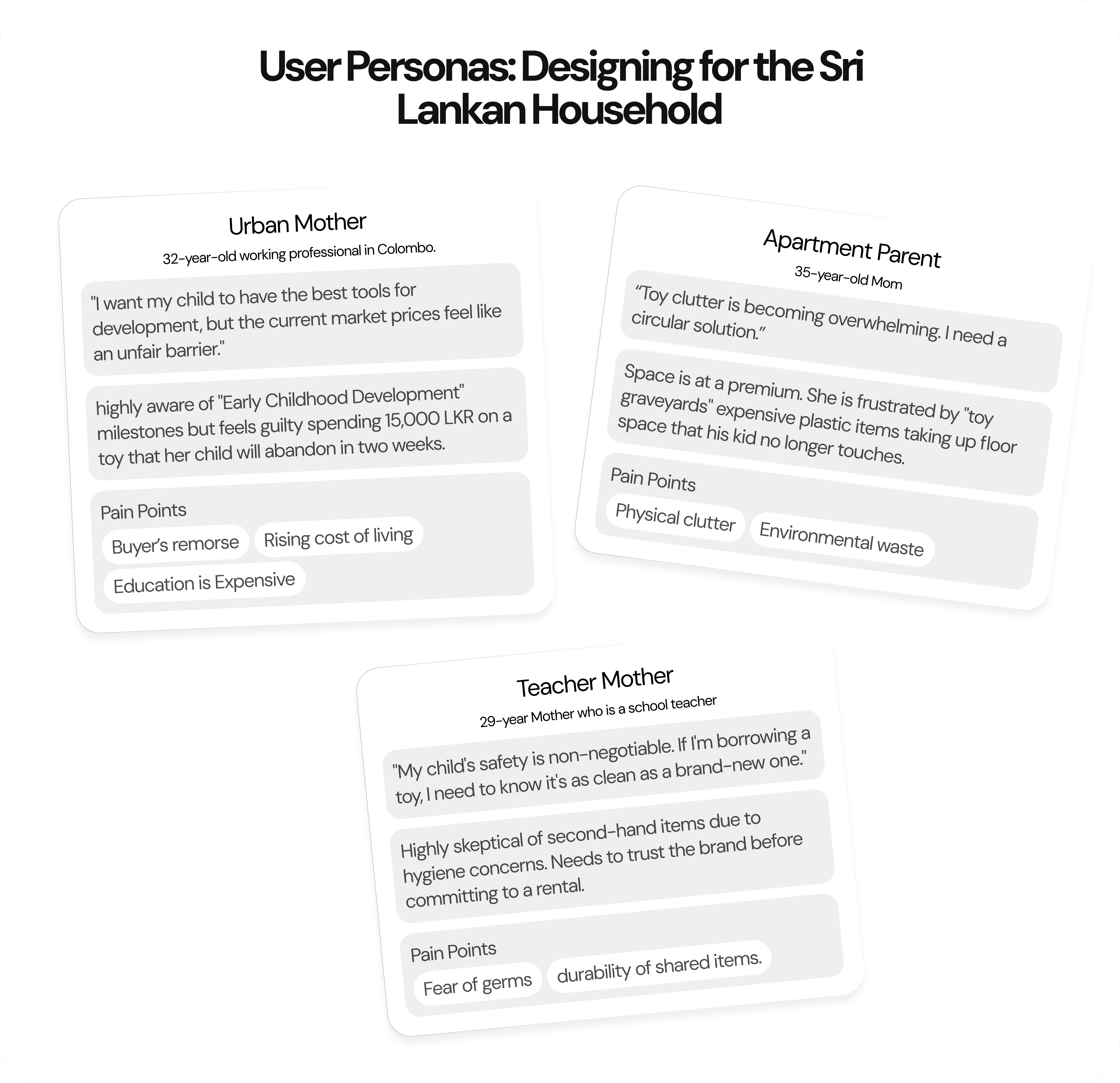
User Personas: Designing for the Sri Lankan Household
Competitive Landscape: Strategic Analysis
I conducted a targeted audit of global and regional players to understand the "Rental vs. Retail" mental models. While some apps solve for travel (BabyQuip) or collection variety (Yalla), none fully addressed the economic resilience and logistics trust required for the Sri Lankan context.
Competitor | Business Model | Key Strength | Strategic Gap (What ToyShare Solves) |
BabyQuip | Rental (Travel-Focused) | Peer-to-Peer Quality: Heavy focus on "Quality Providers" and insurance for travel gear. | Accessibility: Focused on high-cost travel gear rather than daily developmental toy rotation for local households. |
EleFant | Subscription Rental | Educational Value: Strong focus on creative learning, sustainability, and space-saving. | Transparency Logistics: Lacks the "on-site" QR-handshake and real-time map hubs needed to lower Sri Lankan delivery costs. |
Yalla Toys | E-Commerce (Retail) | Inventory Breadth: Massive brand catalog (LEGO, Barbie) and high-quality filtering systems. | The Ownership Burden: High upfront costs and no solution for the "2-week boredom" cycle identified in my research. |
Strategic Requirements & Product Logic
This table maps my technical requirements to the Design Pivots derived from user research. Each feature is designed to directly mitigate a specific pain point found in the Sri Lankan market.
Design Pivot | Feature Module | Functional Requirement | Strategic Value / UX Goal |
Value & Relevance | Personalized Onboarding | Intelligent child profiling (Age & Developmental Goals). | Retention: Curates the feed so parents only see relevant, age-appropriate educational tools, reducing choice paralysis. |
|---|---|---|---|
Security | OTP-verified account creation. | Community Trust: Ensures a high-quality, verified user base which is critical for a sharing economy. | |
Hygiene & Quality | Trust Catalog | Transparency Filters (Hygiene Status) & Milestone Views. | Risk Mitigation: Directly addresses the 90% of users worried about cleanliness by making hygiene a searchable attribute. |
Enhanced Intelligence | Mandatory Sanitization Log & 5-point Condition Wear-Meter. | Expectation Management: Reduces disputes by being radically transparent about the toy's physical state before booking. | |
Savings Tracking | Smart Reservation | Dynamic rental periods & "Price Gap" display (Retail vs. Rent). | Economic Justification: Constantly reinforces the financial benefit of the platform at the moment of purchase. |
Payment Security | Milestone-based Escrow Payment. | Transaction Safety: Protects the user's capital until physical quality is verified on-site. | |
Seamless Logistics | One-In, One-Out Swap | Swap Coordinator & Map-Based Hub Discovery. | Operational Efficiency: Minimizes the "travel burden" for parents by synchronizing returns and pickups into a single trip. |
Verification | QR-Handshake Scanner System. | Accountability: Creates a digital audit trail of the transfer, protecting both the provider and the borrower. | |
Accountability | Quality Assurance | On-site Quality Reports & Evidence-based (Photo) Returns. | Platform Integrity: Empowers users to act as "quality control," ensuring only high-standard toys remain in circulation. |
Dispute Resolution | "Smart Exchange" for rejected items. | User Success: Ensures the parent’s primary goal (getting a toy for their child) is met even if the first option fails. | |
Community & Impact | Engagement | Learning Outcome Reviews & Impact Dashboard. | Psychological Reward: Shifts the focus from "renting a used item" to "investing in a child's growth and environmental sustainability." |
ToyMart System Functional Requirements
Module | Feature / User Requirement | Logic & Design Pivot |
Onboarding | Multi-channel Registration: Register via Email/Password or Google Auth. | Lowers friction for busy parents. |
|---|---|---|
Security Verification: OTP-based authentication for all new accounts. | Trust: Ensures a verified community of real users. | |
Profile Creation: Capture Name, Birthday (Child’s), and secure Password. | Enables age-based personalization. | |
Discovery | Omni-channel Browsing: View available toys via Grid List or Interactive Map. | Logistics: Helps parents find toys within their immediate commute. |
Dynamic Search: Query by location and specific date availability. | Ensures real-time accuracy for short-term rentals. | |
Smart Filtering: Filter by Age, Gender, Quality, Color, Size, and Usage Count. | Value: Allows users to find toys at specific "Wear-and-Tear" price points. | |
Evaluation | Enhanced Description: View Photos, Owner details, and Usage History. | Trust: Social proof via "Number of times owned." |
The Quality Meter: Visual 5-point scale and "Hygiene Status" indicator. | Trust: Addresses the top concern of 90% of surveyed parents. | |
Geospatial Context: Embedded map showing the exact pickup hub location. | Reduces "hidden" effort in the rental process. | |
Transaction | Reservation Logic: One-click CTA triggers a request to the toy owner/hub. | Streamlines the supply-chain communication. |
Secure Payment: Integrated online payment with escrow capabilities. | Value: Protects users until the toy is physically received. | |
Operations | QR-Scanner: In-app scanner to verify receipt of toy on-site. | Logistics: Provides legal/digital proof of the transfer. |
Real-time Confirmation: Instant feedback and status update to "My Toys." | Reduces anxiety during the physical exchange. | |
Feedback | Multi-dimensional Review: Rate the toy quality and leave descriptive feedback. | Trust: Constant refinement of the shared inventory quality. |
Quality Report (Dispute): Upload photo evidence and report sub-par items. | Accountability: Protects the platform’s reputation. | |
Smart Exchange: Instant rerouting to a replacement toy if the original is rejected. | Logistics: Resolves errors without making the parent leave the hub empty-handed. |
Competitive Landscape: Strategic Analysis
I conducted a targeted audit of global and regional players to understand the "Rental vs. Retail" mental models. While some apps solve for travel (BabyQuip) or collection variety (Yalla), none fully addressed the economic resilience and logistics trust required for the Sri Lankan context.
Competitor | Business Model | Key Strength | Strategic Gap (What ToyShare Solves) |
BabyQuip | Rental (Travel-Focused) | Peer-to-Peer Quality: Heavy focus on "Quality Providers" and insurance for travel gear. | Accessibility: Focused on high-cost travel gear rather than daily developmental toy rotation for local households. |
EleFant | Subscription Rental | Educational Value: Strong focus on creative learning, sustainability, and space-saving. | Transparency Logistics: Lacks the "on-site" QR-handshake and real-time map hubs needed to lower Sri Lankan delivery costs. |
Yalla Toys | E-Commerce (Retail) | Inventory Breadth: Massive brand catalog (LEGO, Barbie) and high-quality filtering systems. | The Ownership Burden: High upfront costs and no solution for the "2-week boredom" cycle identified in my research. |
Feature Comparison Matrix
This matrix compares the functional requirements of ToyShare against the current market leaders.
Feature | BabyQuip | EleFant | Yalla Toys | ToyShare (Sri Lanka) |
Monetization | Rent | Subscribe | Buy | Rental |
Age-Based Filtering | ✅ | ✅ | ✅ | ✅ |
Map-Based Discovery | ❌ | ❌ | ❌ | ✅ |
Hygiene/Sanitisation Log | ❌ | ⚠️ (Basic) | ❌ | ✅ |
Swap Logistics | ❌ | ✅ | ❌ | ✅ |
QR Scan Confirmation | ❌ | ❌ | ❌ | ✅ |
Savings/Impact Dashboard | ❌ | ❌ | ❌ | ✅ |
Competitive Synthesison
The audit revealed a significant "Trust-Cost Gap" in the market:
Retailers (Yalla) focus on variety but fail on affordability.
Rental Apps (BabyQuip/EleFant) focus on convenience but lack a robust accountability system for hygiene and physical condition.
ToyMart’s Market Position: I positioned ToyMart to fill this gap by combining the filtering sophistication of a high-end retailer like Yalla with a rigorous logistics and hygiene framework (QR-Handshake and Sanitization Logs). This moves the service from a simple "rental" to a "Managed Developmental Utility."
Wireframe design
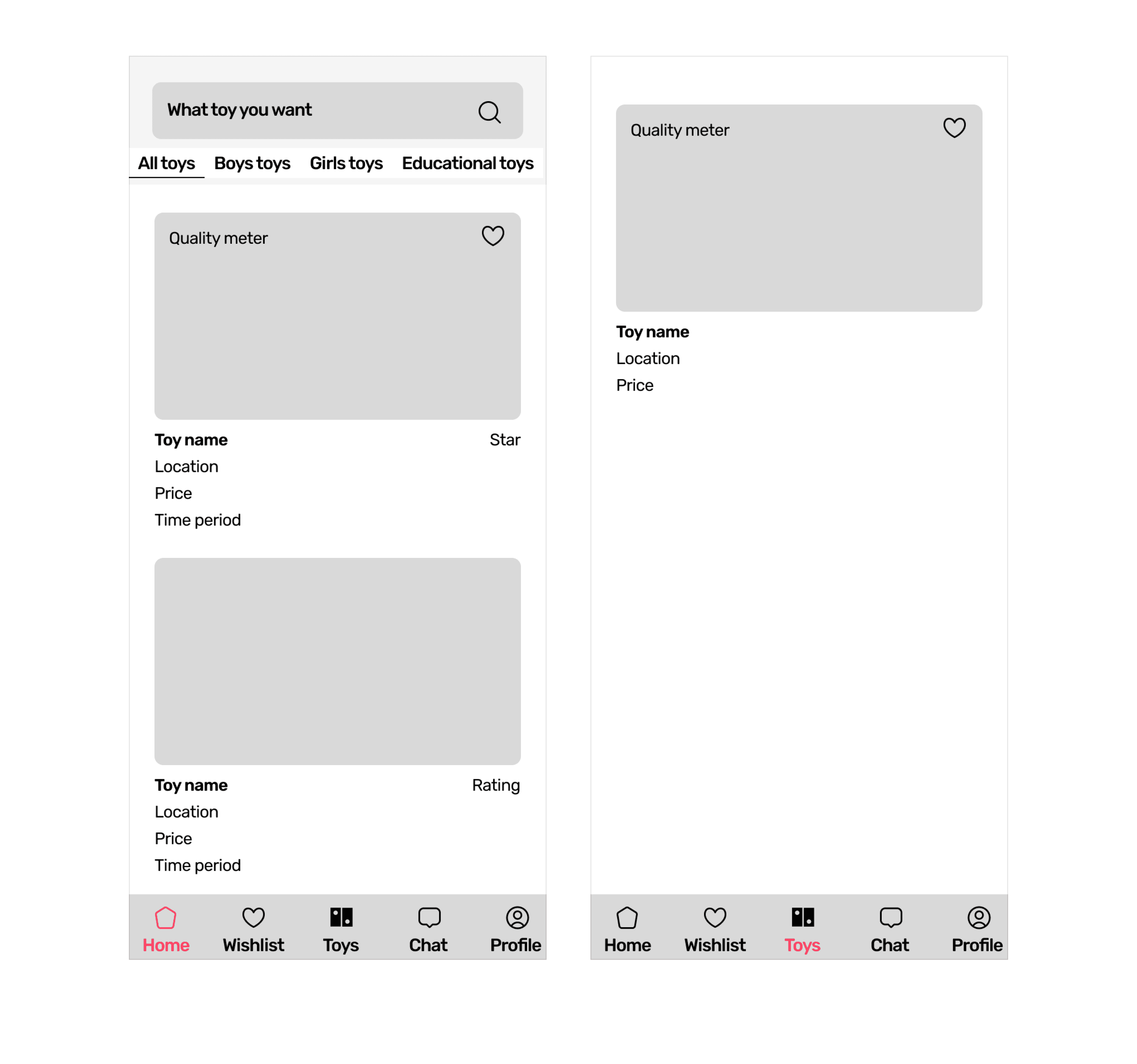
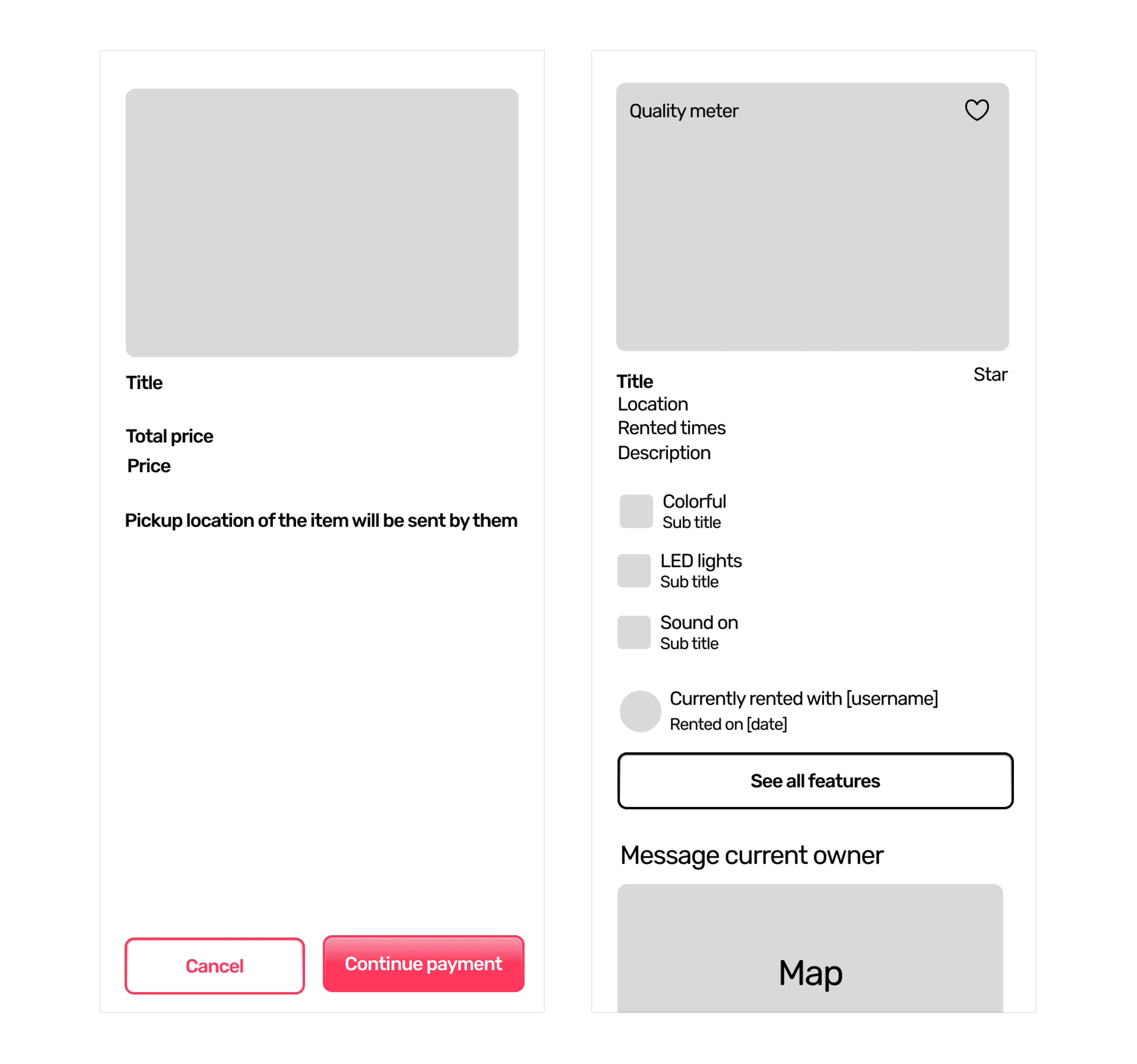
For the design of the application wireframes are designed for all the interfaces. Down below are some of the wireframes designed.
Final designs
Many User Interfaces are designed for the application. Down below are the most importance screens of the application.
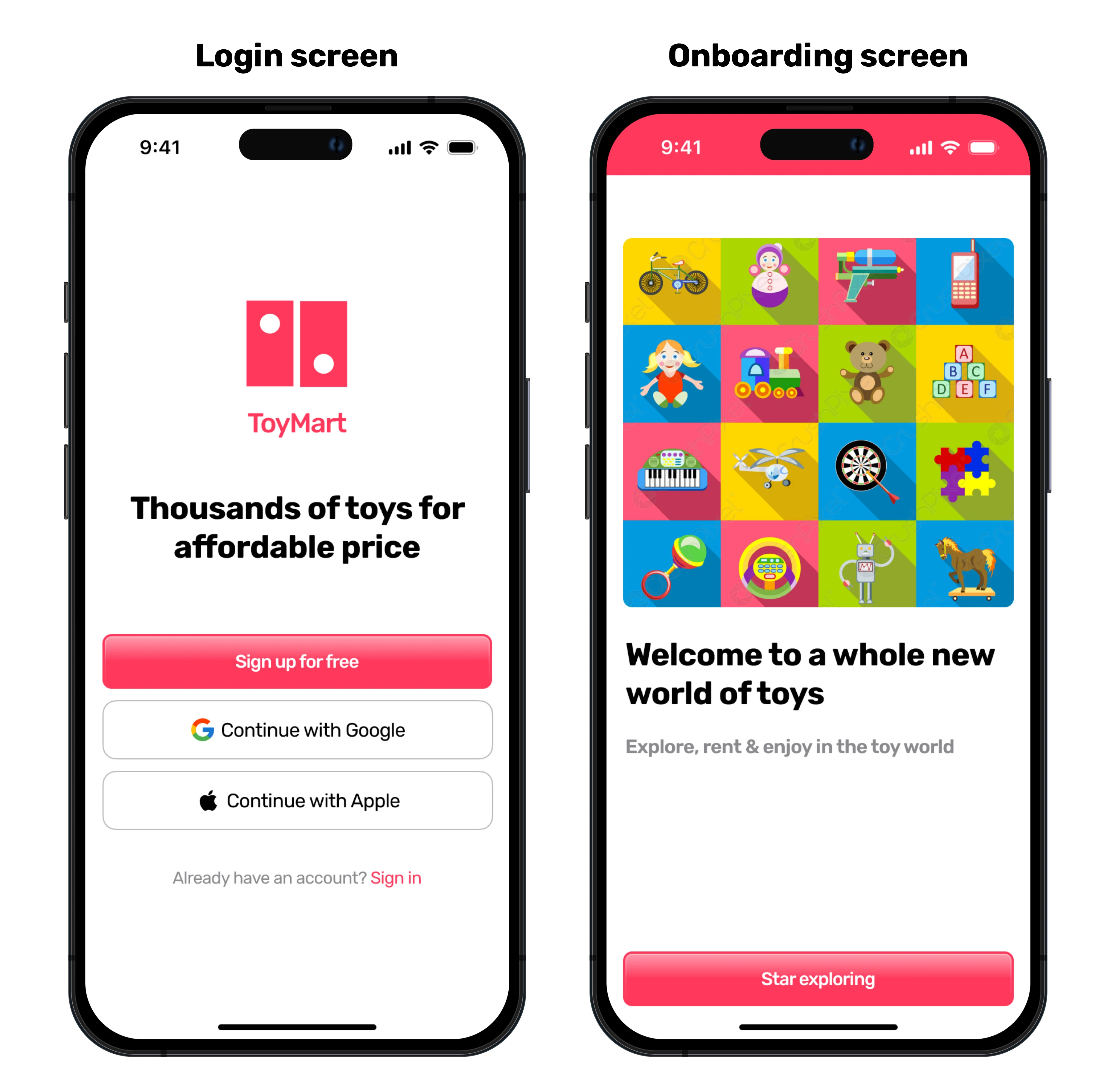
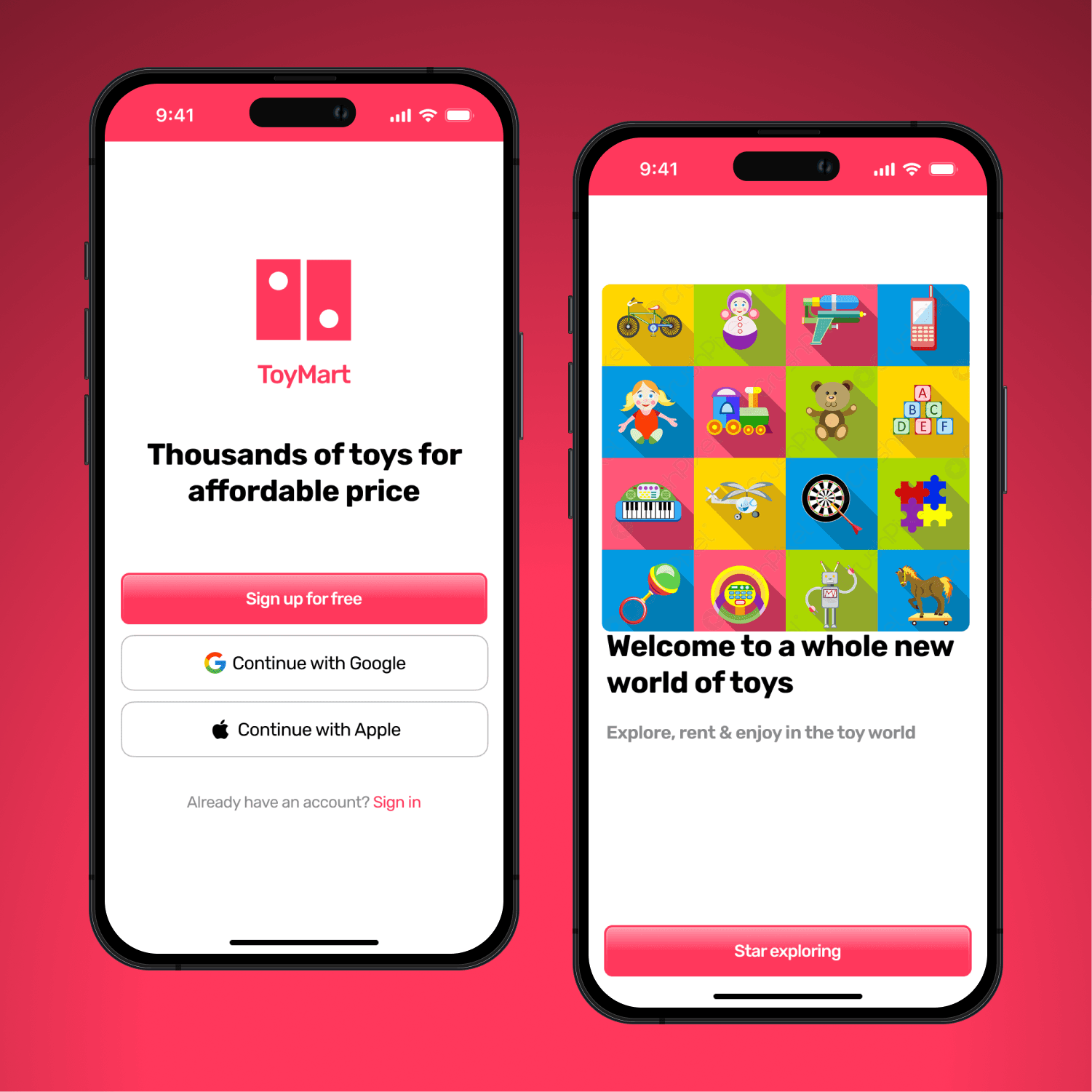
The above login screen lets the user to login with multiple option. Users can provide their email and contact details or use their Google, Apple account to get started. Adding Google login option improves sign ups.
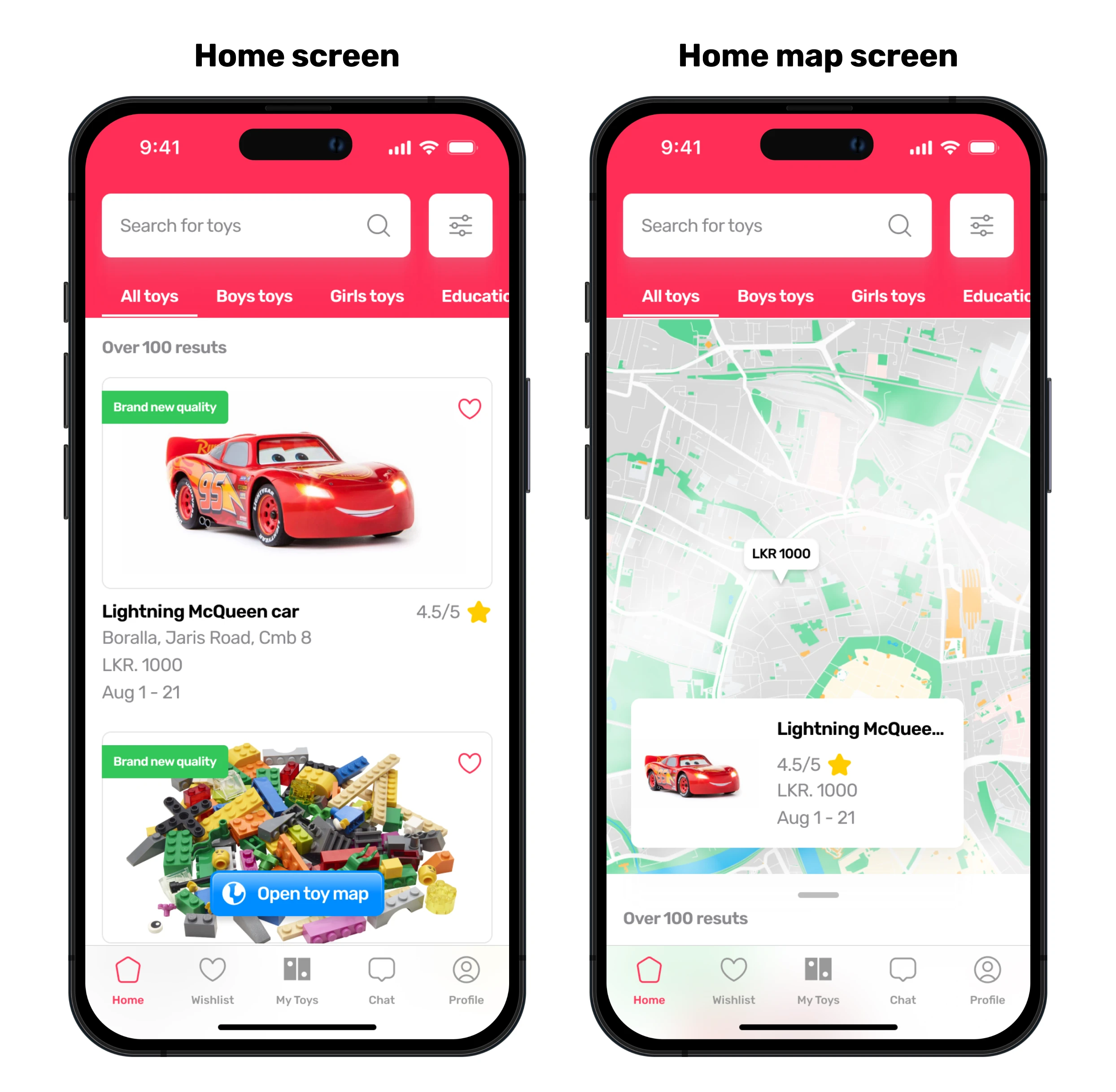
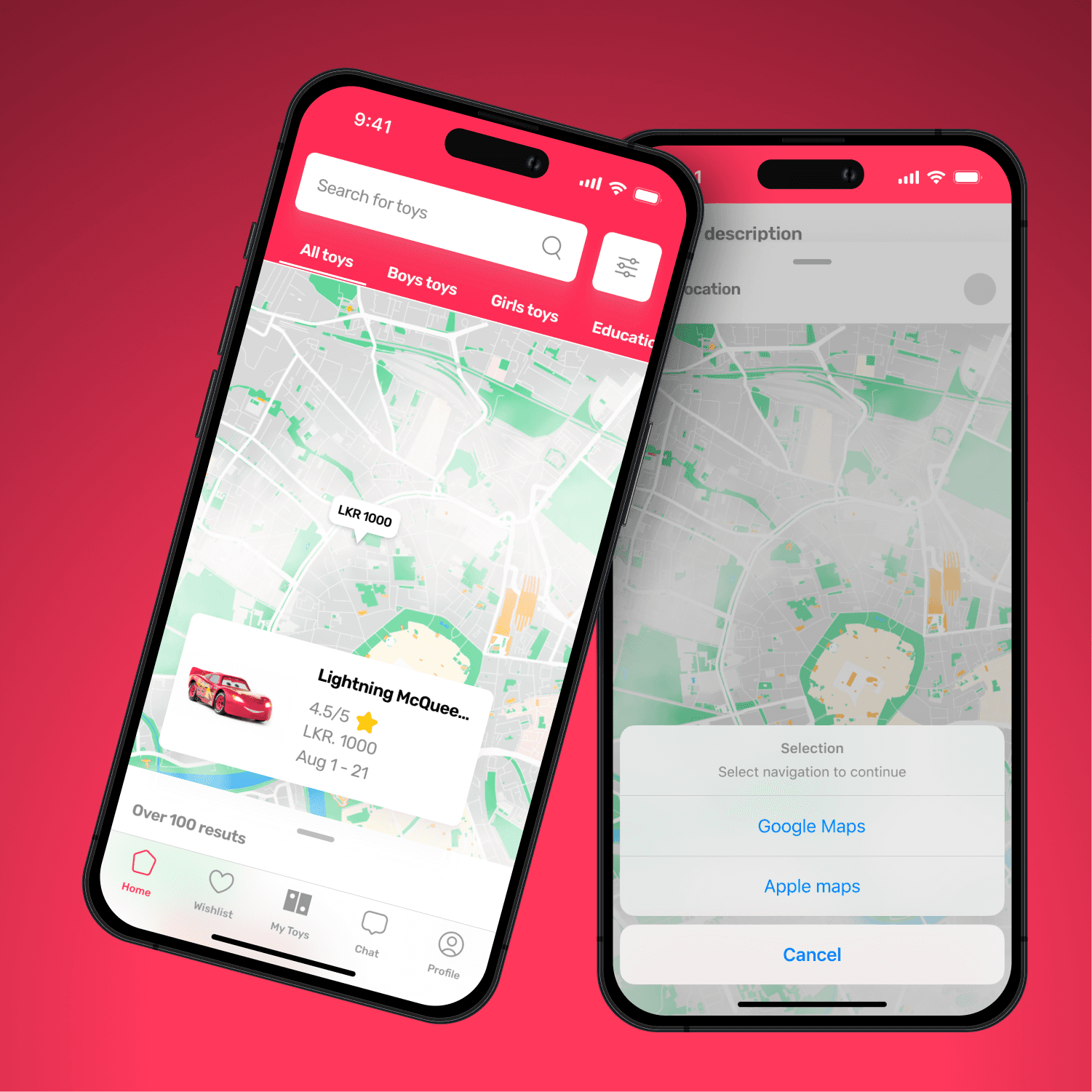
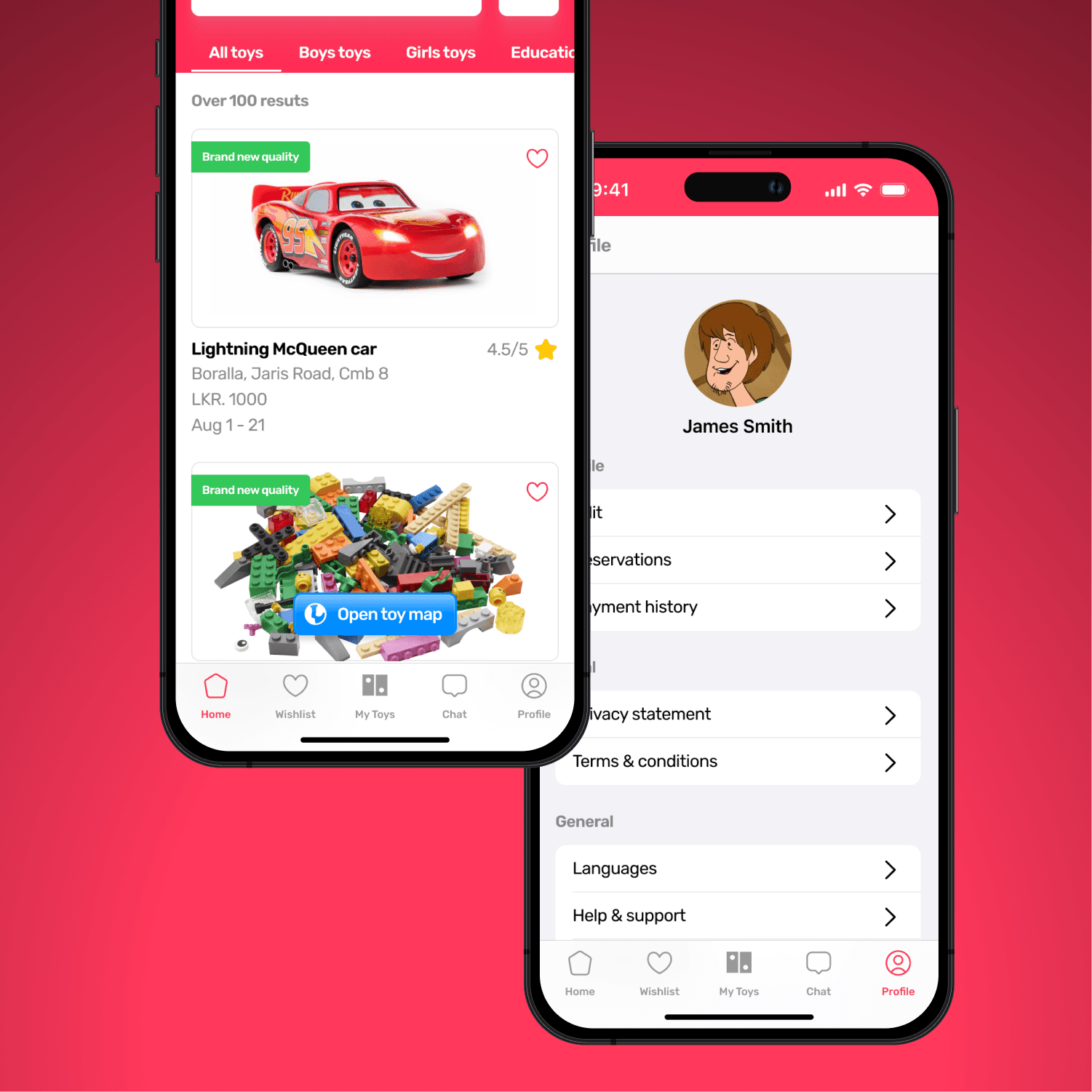
The available toys are displayed on the home screen for the user, so they don't have to hustle around adding their location. Users can drag down interface to view the available toys on the map as well.
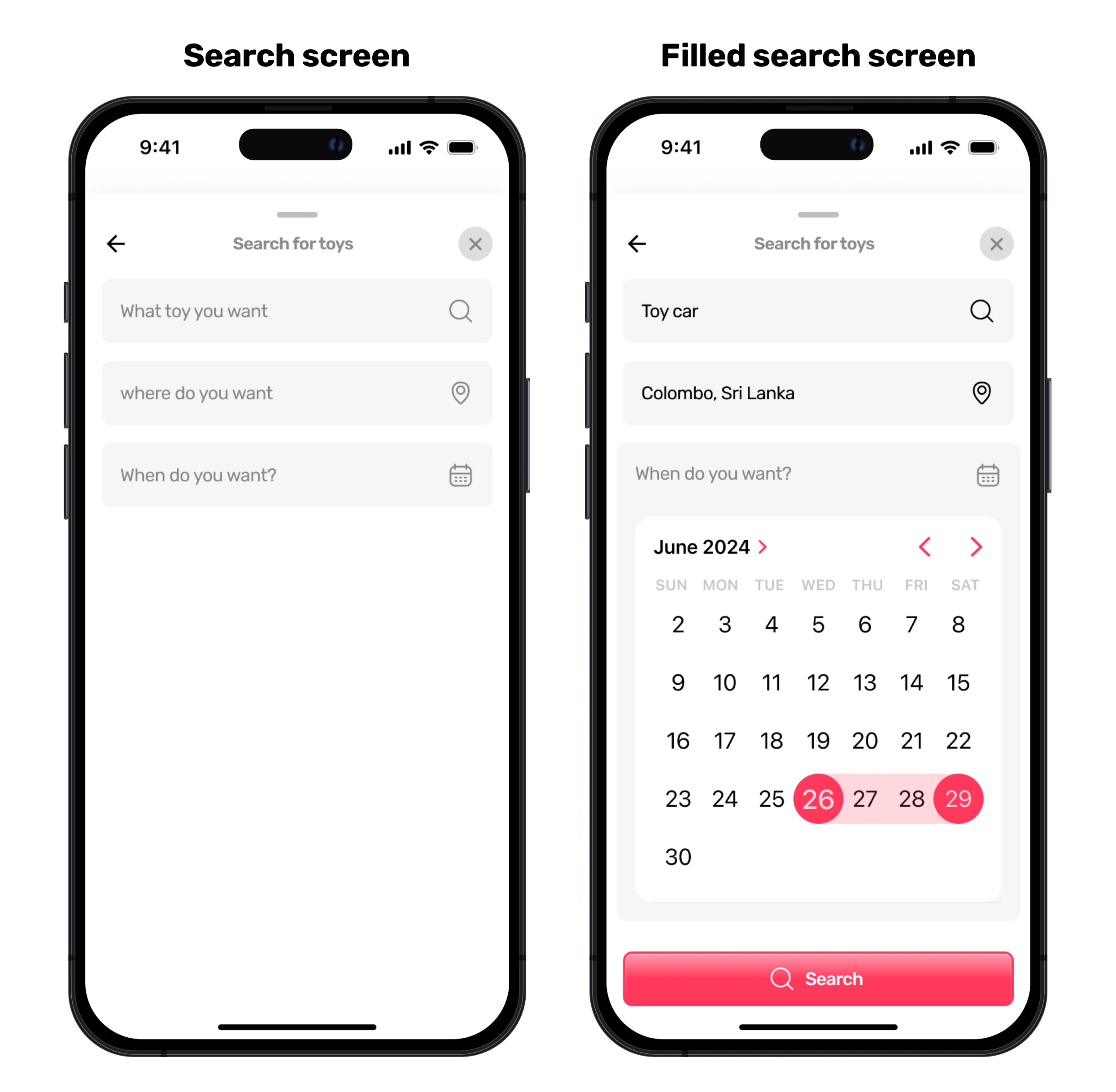
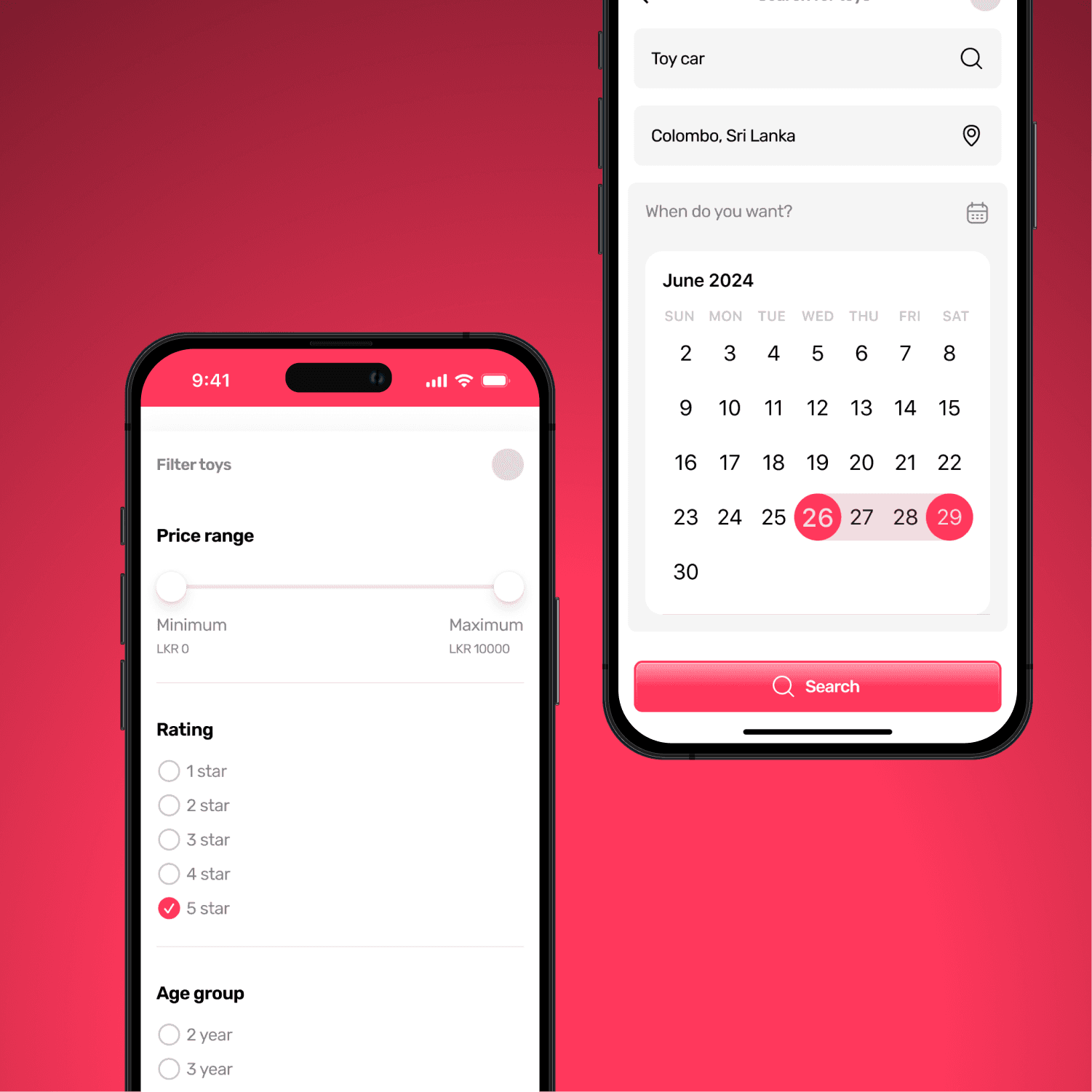
The home screen has a search for the user to search for toys to rent. Users can search by adding toy name, location and the duration they need their toy for. Based on the added search queries, the results are generated.
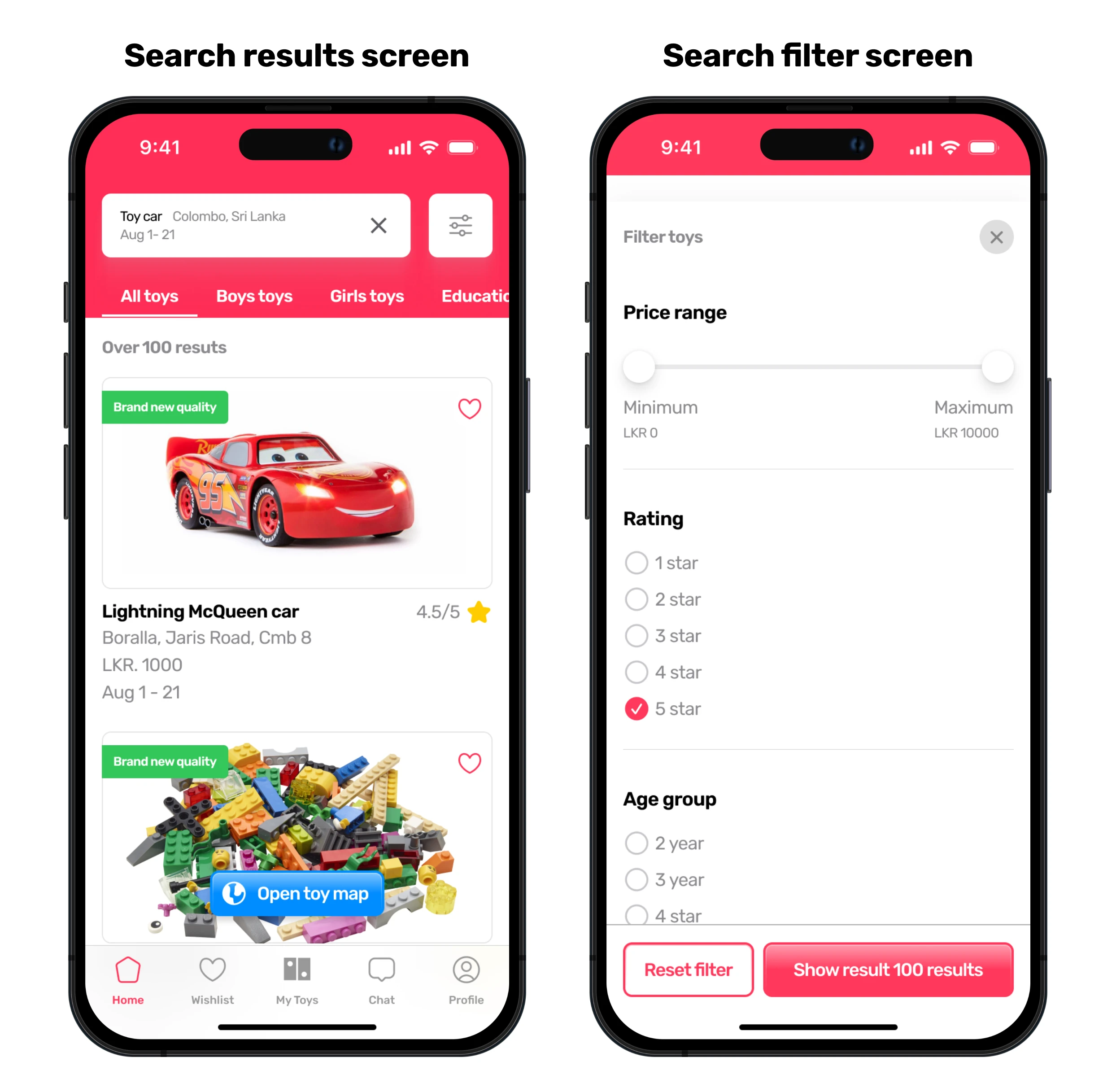
The generated results of the search inputs are shown on the screen as above. The users can filter the generated results, under different categories, such as; rating, age, quality etc.
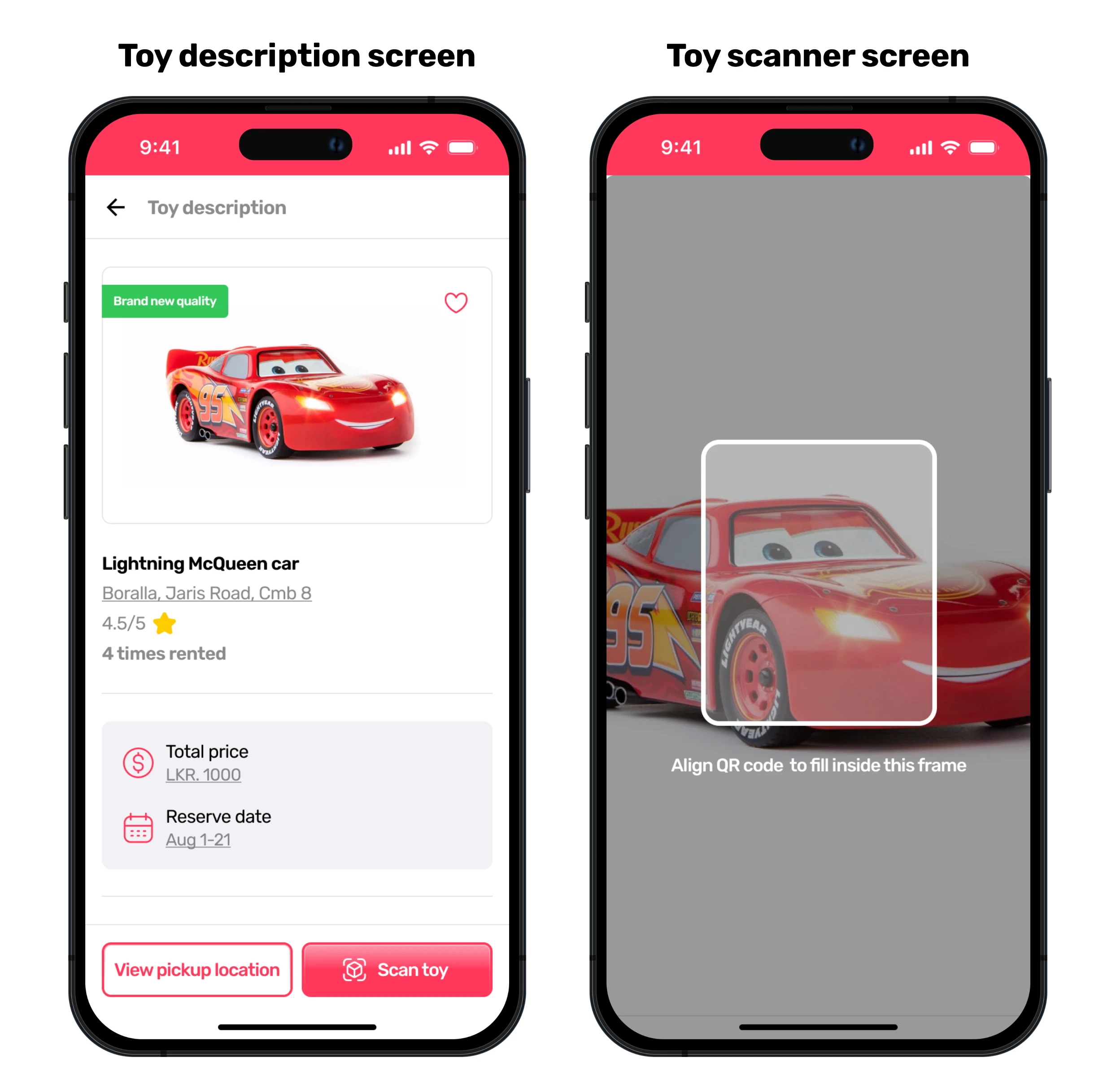
The users can view the details of the toy they have reserved. They have options to view the pickup locations of the toy, and scan the toy when receiving for confirmation.
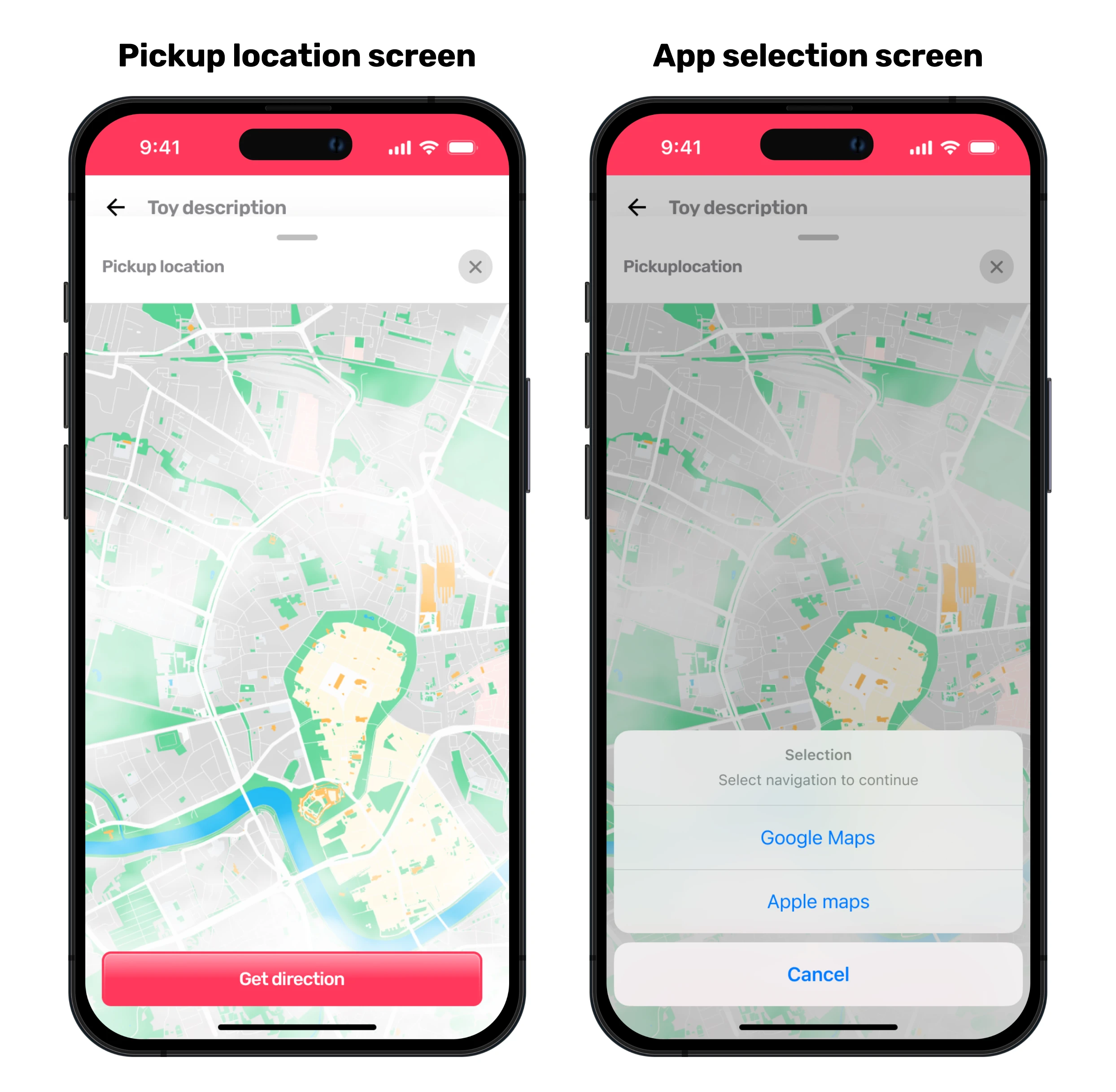
The pickup location is viewable for the users on the map. They can navigation the to the location by selecting a map app option.